Signs a tree needs removing include a newly lifting root plate, major structural failure, or deterioration that cannot be managed safely while keeping the tree. A sparse crown or a leaning trunk alone does not settle the question. For homeowners in Gloucester, the important distinction is between a change worth monitoring and evidence that needs prompt professional assessment.
A new lean is different from a longstanding one
A tree that has always grown at an angle may have adapted to its position. A tree that suddenly changes angle deserves a different response, especially after strong winds or saturated ground. Look from a safe distance for fresh soil cracks, raised turf on one side of the trunk, or newly exposed roots. These observations can indicate movement around the root plate, where stability matters more than whether the leaves still look green.
Do not walk underneath to measure the lean, pull on the trunk, or attempt to support a mature tree yourself. Keep people away from the area it could affect and describe the change to an arborist. Where a tree threatens a public road or overhead electricity lines, alert the relevant authority or network operator as well; arranging private tree work does not replace their response.
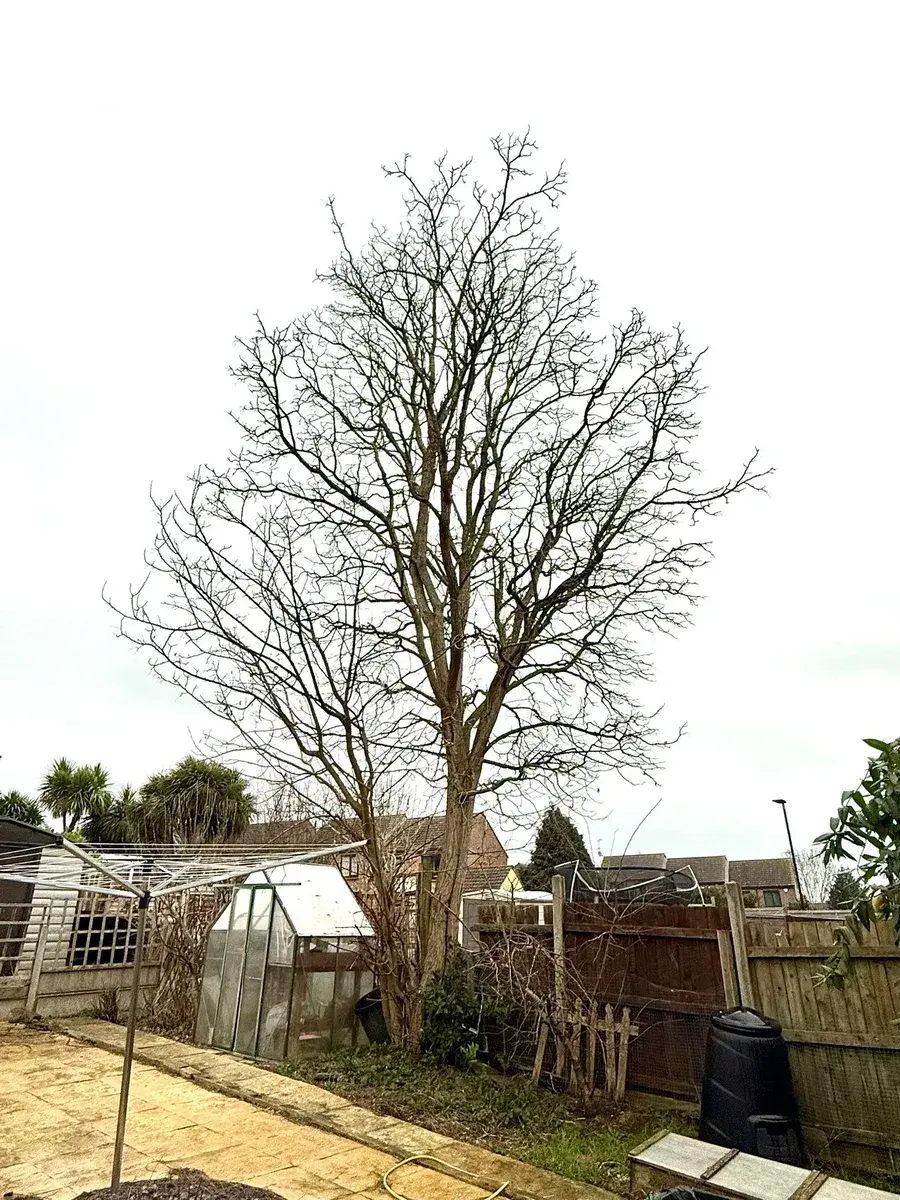
Large cracks and failing branch unions
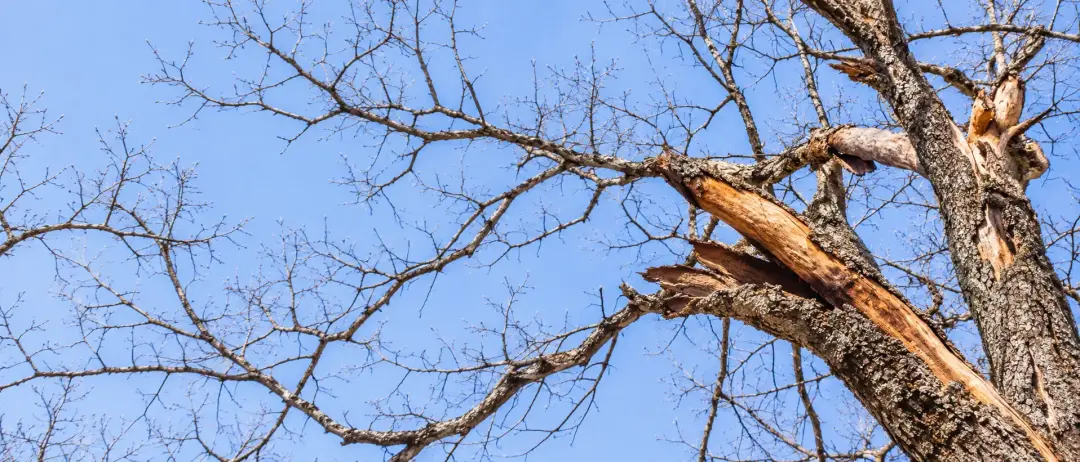
A fresh split through a main stem, a partially detached limb, or a branch hanging in the canopy can make access beneath the tree unsafe. Splits at the junction of two substantial stems are particularly important because a failure there may involve much more than a small peripheral branch. The size and position of the affected part, its remaining attachment and what lies below all influence the next step.
A defect does not automatically require removing the entire tree. Targeted work may deal with one damaged limb while retaining the rest. However, repeated failures, extensive cracking or defects affecting the main supporting structure can narrow the options. Photographs taken from outside the potential fall area help explain what changed, but cannot show every internal defect. A tree health assessment can establish whether retention is realistic.
Practical points
- Keep clear of fresh splits and hanging limbs.
- Record changes from a safe position.
- Assess the whole tree before choosing removal.
Considering removing a tree from your garden?
Wood Lane Treeworks provides tree removal and other tree surgery services across the following local areas:
Dead branches and a crown that keeps declining
Seasonal leaf loss is normal for many trees. Concern increases when the same tree develops progressive branch death, produces much smaller leaves, or fails to recover during its usual growing season. Compare the whole crown with earlier photographs and with similar trees nearby, allowing for species differences. A single bare branch may have a local explanation; repeated dieback extending towards the main stem needs closer investigation.
Ash needs particular care. Government guidance for ash-affected woodland cites European research reporting mortality of up to 85%, but that is a population finding, not a prediction for one garden tree. The practical question is the condition of this tree and the consequences of failure at this location. Some affected trees can be retained; badly deteriorated ash may require specialist removal planning because the wood can become brittle.

Fungi, cavities and damage near the base
Fungal brackets on a trunk or at its base can indicate decay, although identification and location matter. Some fungi break down dead material without making the whole tree unstable; others affect important structural wood. Similarly, a hollow trunk is not a simple pass-or-fail test. Remaining sound wood, the shape of the opening and loading on the tree must be assessed together.
Tell the assessor about recent excavations, vehicle impacts, changes in ground level or building work. Root injuries may be hidden, and a tree can remain in leaf despite a stability problem. Avoid digging around the base or cutting away roots to investigate. Those actions can add damage and remove useful evidence. Removal becomes more likely when decay or injury compromises essential support and practical measures cannot reduce the resulting risk sufficiently.
Damage to property needs evidence
A tree close to a house is not automatically a threat to its foundations. Roots lifting a path, branches touching a roof and suspected subsidence are different problems requiring different evidence. The first may involve surface rooting, the second clearance, and the third an investigation of soil, drains, building movement and vegetation. Removing a tree on suspicion alone can leave the actual cause unresolved.
Start by recording the location and timing of damage. For structural movement, involve your insurer or a suitable building professional before authorising felling. For a clearance problem, ask whether selective pruning could achieve the required space without excessive cutting. A proportionate decision considers what is failing, whether the tree caused it, and whether a less extensive intervention would work. Neither shade nor a large canopy is, by itself, proof that removal is necessary.
When removal becomes the sensible option
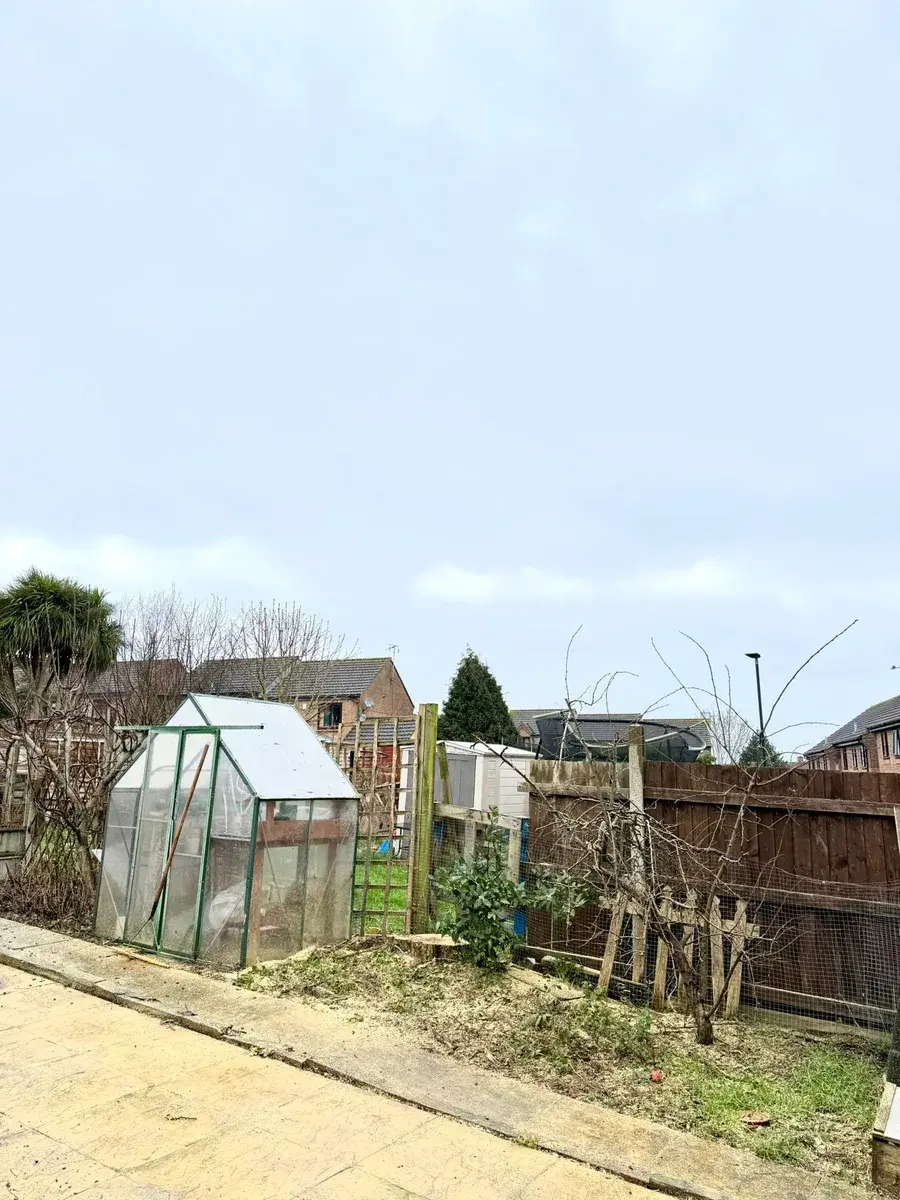
Removal may be justified when a tree has died in a location where failure could cause harm, is actively moving, or has major defects that cannot be managed adequately. Its surroundings matter: a dangerous limb over a busy entrance needs a different response from deadwood in an inaccessible habitat area. An assessment should connect the observed defect with a practical recommendation and explain how urgent that recommendation is.
Before planned work, establish ownership and check protection, conservation-area requirements and wildlife constraints. Do not assume that describing a tree as dangerous removes every requirement. An arborist can help identify the relevant next steps and the evidence needed. Where removal is recommended, agree the scope explicitly, including whether the stump remains, how timber is handled and what replacement planting would suit the available space.
Sources and further reading
Research checked on 5 November 2026. Figures retain their stated reporting periods and geographic scope.
Summary and next steps
A sudden structural change deserves prompt attention; slower decline calls for evidence rather than guesswork. If the tree cannot be retained with acceptable risk, Wood Lane Treeworks's tree removal service provides the next step for arranging suitable work in Gloucester.